
A hernia occurs when tissue such as intestine or abdominal fat pushes through a weak area or defect in the muscles of the abdominal wall. Hernias may develop in the groin, around the belly button, through a previous surgical scar or at other weak areas of the abdominal wall.
Some hernias remain small and cause few symptoms, while others may gradually enlarge, become painful or develop complications. Treatment depends on the type of hernia, symptoms, size of the defect, previous surgery and the patient’s overall health.
Dr. Sushant Wadhera provides evaluation and open and laparoscopic hernia treatment in Delhi for inguinal, femoral, umbilical, incisional, ventral and recurrent hernias.
What is a Hernia?
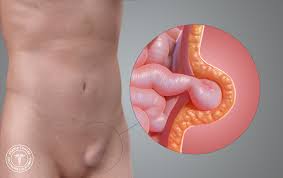
A hernia occurs when part of the intestine, abdominal fat or another organ pushes through a weak spot, defect or opening in the muscles of the abdominal wall, creating a visible or palpable bulge.
Some hernias are present from birth (congenital), caused by incomplete closure of membranes inside the abdomen, and may only become noticeable later in life. Others develop gradually due to muscle weakness, strain or previous surgery.
- Reducible hernia: the bulge disappears on lying down or when gently pressed.
- Irreducible hernia: the bulge stays out and does not go back. This needs prompt surgical review because the risk of complications is higher.
Risk Factors for Hernia
Any condition that increases pressure inside the abdomen or weakens the abdominal wall can lead to a hernia:
- Ageing and loss of muscle tone
- Heavy lifting, strenuous workouts or repeated straining
- Chronic cough, constipation or difficulty passing urine
- Obesity and multiple pregnancies
- Smoking and poor nutrition
- Previous abdominal surgery
- Fluid in the abdomen from liver or kidney disease
Symptoms of Hernia
- A lump or swelling in the groin, around the belly button or near an old surgical scar
- A bulge that gets bigger when standing, coughing or straining and smaller when lying down
- Pain, heaviness or a dragging feeling, especially while lifting
- Burning or aching discomfort at the site of the bulge
- Swelling in the scrotum in men with an inguinal hernia
Seek urgent care if a hernia suddenly becomes very painful, hard or tender, cannot be pushed back, or comes with vomiting, a swollen abdomen, or inability to pass stool or gas. These can be signs of a strangulated hernia, which is a surgical emergency.
Types of Hernia
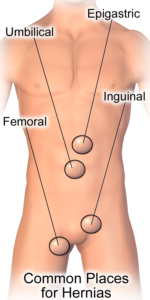
Hernias are named according to where they occur, most commonly between the lower chest and the groin.
Inguinal Hernia
The most common type of hernia, seen in people of all ages and more often in men. It appears as a bulge in the groin, at the upper part of the thigh, and may extend into the scrotum. It often becomes more noticeable when standing, coughing or lifting.
Femoral Hernia
Occurs in the same region as an inguinal hernia, just below the groin crease, and is more common in women. Femoral hernias carry a higher risk of complications, so early repair is usually advised.
Umbilical Hernia
A bulge at or just around the belly button. It is common after pregnancy, in people with obesity and in those with chronic cough or straining. Small umbilical hernias can often be repaired as a day-care procedure.
Ventral & Epigastric Hernia
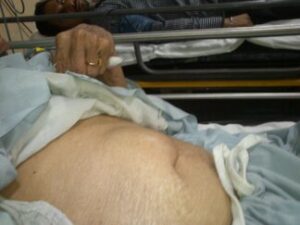
A ventral hernia is any hernia through the front of the abdominal wall. Epigastric hernias occur between the belly button and the chest, and spigelian hernias occur below and to the side of the navel. Symptoms include a bulge and pain on lifting or straining. Umbilical and incisional hernias are also types of ventral hernia.
Incisional Hernia
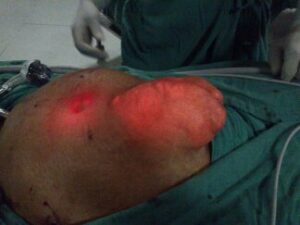
An incisional hernia develops through the scar of a previous abdominal operation. It is a common complication of open abdominal surgery, and the risk is higher with smoking, obesity, diabetes, wound infection and poor nutrition.
Incisional hernias tend to enlarge over time and can lead to obstruction or strangulation, so repair is usually recommended. Treatment involves safely returning the abdominal contents and reinforcing the wall with mesh, either as an open repair (sublay mesh) or laparoscopically (IPOM or sublay). Large hernias may need anterior or posterior component separation, done open or laparoscopically.
Recurrent Hernia
A hernia that returns after a previous repair. Recurrent hernias need careful planning because of scar tissue from the earlier surgery. In many cases, laparoscopic repair lets the surgeon approach the hernia through fresh, unscarred tissue, which makes the repair safer and more durable. Dr. Wadhera evaluates each recurrent case individually to choose the most suitable technique.
Hernia Treatment Options
A hernia in an adult does not heal on its own, and surgery is the only definitive treatment. The right approach depends on the type and size of the hernia, previous surgery and your overall health.
Open Hernia Repair
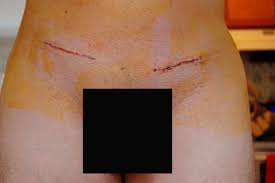
A 5–6 cm incision is made over the hernia and a mesh is placed over the weak area to reduce the chance of recurrence. Open repair is generally offered to patients who are unfit for general anaesthesia or who prefer open surgery.
Laparoscopic Hernia Repair
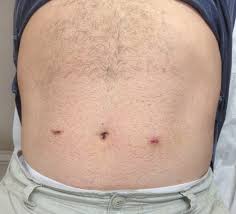
In laparoscopic surgery, the entire procedure is done through three small keyhole incisions under general anaesthesia. A much larger mesh can be placed than in open surgery. Open repair typically uses an 11 × 5 cm mesh per side, while laparoscopic repair uses a 15 × 12 cm mesh placed behind the defect, giving wider coverage and lower recurrence rates.
Laparoscopic inguinal hernia repair is done by one of two techniques, chosen according to the patient’s condition and body type:
- TEP (Totally Extra-Peritoneal repair)
- TAPP (Trans-Abdominal Pre-Peritoneal repair)
Advantages of laparoscopic repair:
- Less pain and faster recovery
- Smaller scars
- Hernias on both sides repaired through the same three ports
- Walking within a few hours, usually discharged within 24 hours
Recovery After Hernia Surgery
- Same day: most patients walk within a few hours of laparoscopic repair.
- Hospital stay: usually discharged within 24 hours. Small umbilical hernias may be done as day care.
- Daily activities: light activity and short walks from the next day.
- Desk work: most people return within about a week, depending on the repair.
- Heavy lifting and gym: resume gradually, as advised by your surgeon.
You’ll get clear guidance on pain relief, wound care, diet (to avoid constipation and straining) and follow-up visits to make sure healing is on track.
Hernia Surgery for Patients from Greater Kailash & Nehru Place
Dr. Sushant Wadhera treats hernia patients from Greater Kailash I & II, Chirag Enclave, Nehru Place, CR Park, East of Kailash, Kalkaji and across South Delhi. Consultations take place at the clinic in Sarita Vihar, and surgery can be arranged at associated hospitals close to Greater Kailash, including Fortis C-DOC (Chirag Enclave) and Apollo Spectra (Nehru Place), depending on your clinical needs and insurance.
Whether you have a new groin hernia, an umbilical hernia after pregnancy or a hernia that has come back after a previous repair, you’ll get a clear evaluation and treatment plan before any decision is made. Learn more about laparoscopic surgery for patients in Greater Kailash.
Why Consult Dr. Sushant Wadhera for Hernia Treatment in Delhi?
Dr. Sushant Wadhera provides evaluation and surgical treatment for different types of groin and abdominal wall hernias in Delhi, including complex and recurrent hernias.
Treatment is planned according to the patient’s symptoms, type of hernia, previous operations, anatomy and overall health rather than using the same surgical approach for every patient.
Dr. Sushant Wadhera
MBBS, MS (General Surgery), FNB (Minimal Access Surgery)
Member, European Association for Endoscopic Surgery (EAES)
Bariatric, Laparoscopic & General Surgeon
Frequently Asked Questions
1. What is a hernia?
A hernia occurs when tissue, such as intestine or abdominal fat, pushes through a weak area in the surrounding muscle or connective tissue. It may appear as a swelling or bulge that becomes more noticeable while standing, coughing or straining.
2. What are the common types of hernia?
Common types include inguinal hernia, femoral hernia, umbilical hernia, epigastric hernia, incisional hernia and other ventral hernias.
3. Does every hernia need surgery?
Not always. Some small or minimally symptomatic hernias may be observed after medical evaluation. Surgery is more commonly recommended when the hernia causes pain, enlarges, affects daily activities or carries a significant risk of complications.
4. Can a hernia heal on its own?
In adults, a true hernia generally does not close permanently on its own. Symptoms may remain stable for some time, but the underlying defect usually persists.
5. What are the symptoms of a hernia?
Common symptoms include a visible or palpable lump, groin or abdominal swelling, pain while lifting or coughing, a dragging sensation, burning discomfort and a bulge that increases while standing or straining.
6. How is a hernia diagnosed?
Many hernias can be diagnosed through medical history and physical examination. Ultrasound, CT scan or MRI may be recommended when the diagnosis is uncertain or when imaging is needed for surgical planning.
7. What is laparoscopic hernia repair?
Laparoscopic hernia repair is a minimally invasive procedure performed through small incisions using a camera and surgical instruments. The hernia is reduced and the weak area is usually reinforced with mesh.
8. What is the difference between TEP and TAPP hernia repair?
TEP and TAPP are two laparoscopic approaches for groin hernia repair. TEP repairs the hernia without entering the abdominal cavity, while TAPP enters the abdominal cavity before reaching the preperitoneal space. Both are established techniques.
9. Is mesh always used in hernia surgery?
Mesh is commonly used in adult groin and abdominal wall hernia repair because it reinforces the weakened area. However, the decision depends on the type of hernia, contamination risk, anatomy and surgical technique.
10. Is laparoscopic hernia surgery better than open surgery?
Neither approach is best for every patient. Laparoscopic repair may offer smaller incisions, faster recovery and lower chronic-pain risk in some patients, while open surgery may be more appropriate in other situations. The choice should be individualized.
11. How long does recovery take after hernia surgery?
Recovery depends on the type of hernia, size of the repair and surgical approach. Many patients can resume light daily activities relatively early, while heavy lifting and strenuous exercise may require a gradual return based on the surgeon’s advice.
12. Can a hernia come back after surgery?
Yes. Hernia recurrence is possible after both open and laparoscopic repair. The risk depends on factors such as hernia type, surgical technique, smoking, obesity, wound healing and overall health.
13. When does a hernia become an emergency?
Seek urgent medical attention if the hernia becomes suddenly very painful, hard, tender, cannot be pushed back, or is associated with vomiting, abdominal swelling, inability to pass stool or gas, or skin redness.
14. Can obesity increase the risk of hernia?
Yes. Obesity can increase pressure inside the abdomen and may also affect wound healing. It can contribute to the development of some hernias and may influence surgical planning and recurrence risk.
15. Is hernia surgery covered by health insurance?
Hernia surgery is covered by most health insurance policies, subject to your policy’s terms and waiting periods. Please check with your insurer. The clinic can guide you on the documents needed at the hospital.
16. Who should I consult for hernia treatment in Delhi?
Patients with groin swelling, abdominal wall bulges, pain or a suspected hernia can consult a surgeon experienced in open and laparoscopic hernia repair. Dr. Sushant Wadhera provides evaluation and hernia treatment in Delhi, including for patients from Greater Kailash, Nehru Place and across South Delhi.
