

Fissure in Ano Surgery is the most effective management
of this extremely painful anal disease.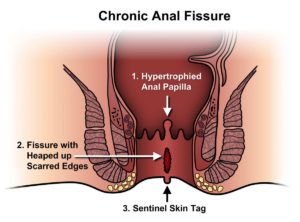
What is Fissure in Ano
-

Chronic Fissure in ano at 6 o clock
An extremely painful anal condition due to a tear in the lining of the anus.
- Chronic Constipation is the most important factor.
- Anal intercourse and Childbirth may also cause it.
- The torn anal lining exposes the underlying muscle, as a result of which there are severe anal spasms during passing motion.
What are the symptoms
- Severe Pain and spasms while passing motion.
- Fear of passing motion due to impending pain
- Bleeding which is usually fresh and bright red.
- A visible crack in the skin and a skin tag near the anal fissure.
Medical Management
- Effective for early cases only.
- Not very effective for chronic cases.
- Includes stool softeners, ointments etc. which have only short term benefit.
- It provides temporary relief as it does not address the underlying thickened anal sphincter.
Surgery for Fissure in Ano
- This is the most effective therapy because it addresses the underlying tensed anal sphincter.
- It’s a short procedure, can be performed as a Day Care surgery.
- Patient can resume daily activity shortly.
Lateral Internal Sphincterotomy (LIS)

- The thickened, tensed internal sphincter is cut laterally.
- Immediately relieves the anal spasm and pain.
- Leads to healing of the ulcer because the anal mucosa is relaxed.
Fissurectomy
- Sometimes performed with the LIS for promoting healing of the ulcer.
A Fissure in Ano maybe also be present along with hemorrhoids as both are linked to chronic constipation.
Read more about Fissure in ano
Frequently Asked Questions
1. What is an anal fissure?
An anal fissure is a small tear in the lining of the anal canal. It commonly causes sharp pain during or after bowel movements and may also cause bright-red bleeding.
2. What causes an anal fissure?
Common causes include constipation, hard stools, excessive straining, repeated diarrhoea and local trauma. In some cases, anal fissures may also be associated with inflammatory or other medical conditions.
3. What are the common symptoms of an anal fissure?
Common symptoms include sharp pain during bowel movements, burning pain afterward, bright-red bleeding, anal muscle spasm, fear of passing stool and, in chronic cases, a small skin tag near the fissure.
4. Can an anal fissure heal without surgery?
Yes. Many acute anal fissures improve with dietary changes, increased fibre and fluid intake, stool-softening measures, warm sitz baths and topical medicines. Surgery is generally considered for selected chronic or persistent fissures.
5. What is the difference between acute and chronic anal fissure?
An acute fissure is relatively recent and may heal with conservative treatment. A chronic fissure persists for a longer period and may develop changes such as exposed sphincter fibres or a skin tag, making additional treatment more likely.
6. How is an anal fissure diagnosed?
Diagnosis is usually based on symptoms and physical examination of the anal area. If the diagnosis is unclear, symptoms are unusual or examination is very painful, additional evaluation may be recommended.
7. What medicines are used to treat anal fissure?
Treatment may include stool softeners, pain-relieving medicines and topical medications that help relax the internal anal sphincter and improve blood flow to the fissure. The specific medicine should be prescribed according to the patient’s condition.
8. Can Botox be used for anal fissure?
Yes. Botulinum toxin injection may be considered for selected patients with chronic anal fissure. It temporarily relaxes the internal anal sphincter, reducing muscle spasm and allowing the fissure time to heal.
9. What is lateral internal sphincterotomy?
Lateral internal sphincterotomy, or LIS, is a surgical procedure in which a controlled portion of the internal anal sphincter is divided to reduce muscle spasm and pressure. It is commonly used for selected chronic anal fissures that have not improved with conservative treatment.
10. Is anal fissure surgery painful?
Some pain or discomfort may occur after surgery, but it is generally managed with prescribed pain-relief medicines and proper wound care. The amount of discomfort varies depending on the procedure and individual recovery.
11. How long does recovery take after anal fissure surgery?
Recovery varies according to the procedure performed and the patient’s overall health. Many patients can return home the same day after surgery and gradually resume routine activities as pain and discomfort improve.
12. Can an anal fissure come back after treatment?
Yes, recurrence is possible, particularly if constipation, hard stools or excessive straining continue. Maintaining soft stools, adequate fibre and hydration can help reduce the risk of recurrence.
13. Can anal fissure surgery affect bowel control?
There is a potential risk of temporary or persistent changes in bowel control after procedures involving the anal sphincter. This is why patient selection and proper surgical planning are important, particularly before lateral internal sphincterotomy.
14. When should I consult a doctor for an anal fissure?
You should seek medical evaluation if you have severe anal pain, repeated bleeding, symptoms that persist despite home treatment, recurrent fissures, swelling, fever or unusual symptoms.
15. Who should I consult for anal fissure treatment in Delhi?
Patients with persistent anal pain, bleeding or chronic fissure symptoms can consult a surgeon experienced in treating ano-rectal conditions. Dr. Sushant Wadhera provides evaluation and treatment for anal fissure in Delhi based on the severity and duration of symptoms.
